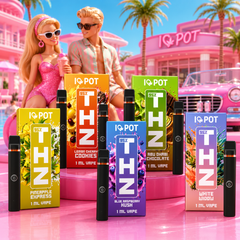



THCP is a cannabinoid with the chemical name Δ9-tetrahydrocannabiphorol, first detected in cannabis in 2019 by an Italian research team. In Germany it isn't a freely tradable substance because it's covered by the Neue-psychoaktive-Stoffe-Gesetz (New Psychoactive Substances Act). That's why we don't carry THCP products. The molecule remains fascinating nonetheless, mainly because of its unusually long side chain and because the name keeps circulating as a search term and category label.
Key facts
- THCP stands for Δ9-tetrahydrocannabiphorol, molecular formula C23H34O2, molar mass around 342 g/mol.
- The side chain consists of seven carbon atoms (heptyl), while THC has five (pentyl).
- First described in 2019 in the journal Scientific Reports, isolated from the cannabis strain FM2.
- In Germany, THCP has fallen under the NpSG since 2023; in the plant it only occurs in trace amounts, so any product sold was made in a lab.
Chemical origin and production of THCP
THCP is a naturally occurring phytocannabinoid, but the plant only produces it in tiny amounts. The research group led by Cinzia Citti isolated it in 2019 from FM2, a medicinal cannabis strain grown in Italy. The amounts found were in the range of hundredths of a percent. That means the substance can't be extracted from flower material on a commercially viable scale.
Everything later sold under the name THCP came from a lab. The usual approach is a multi-step synthesis: a resorcinol building block with a seven-carbon chain is constructed and then linked to a terpene building block, which can come from hemp extract. So the characteristic heptyl chain is chemically produced rather than extracted from the plant. Experts refer to this as a semi-synthetic or fully synthetic cannabinoid, depending on where the starting materials come from.
To date there are no controlled clinical studies on its effects in humans. The 2019 publication describes lab and animal experiments, not usage data. Anyone looking for reliable claims will currently find mostly open questions.
Difference between THCP and THC: chemical structure, not effect
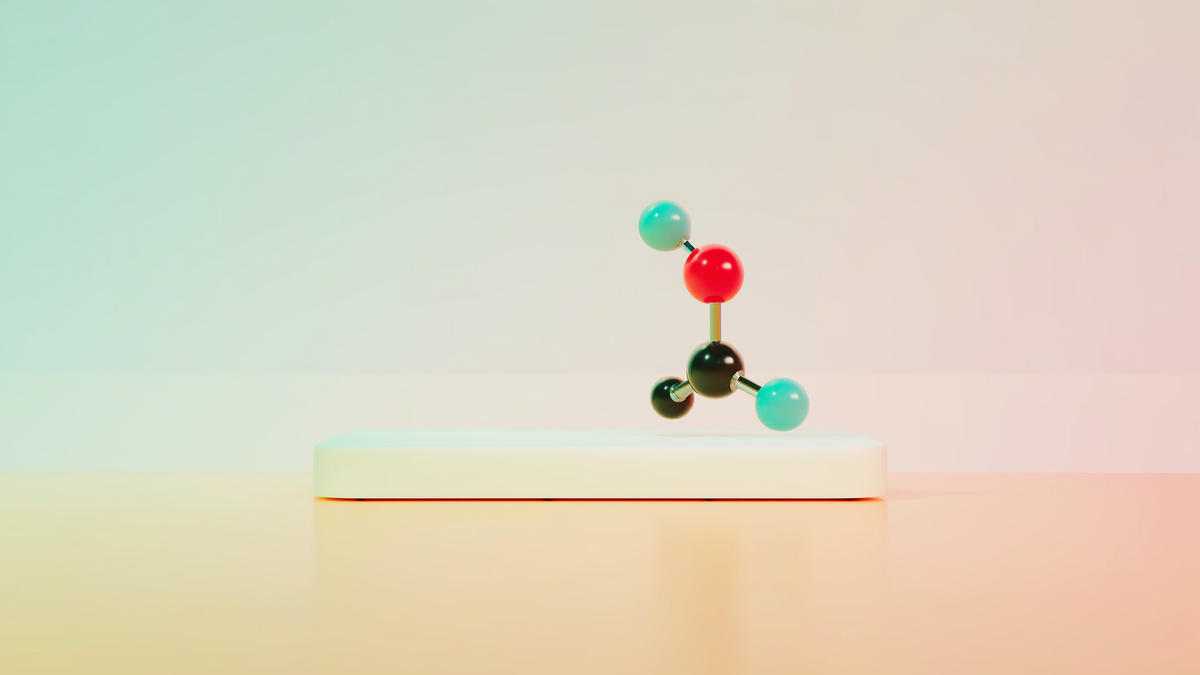
The difference lies in the alkyl side chain on the aromatic ring, not in the core structure. Both molecules share the same dibenzopyran backbone typical of the cannabinoid family. From there, the paths diverge:
| Cannabinoid | Molecular formula | Side chain | Molar mass |
|---|---|---|---|
| THC (Δ9-tetrahydrocannabinol) | C21H30O2 | Pentyl, five carbon atoms | around 314 g/mol |
| THCP (Δ9-tetrahydrocannabiphorol) | C23H34O2 | Heptyl, seven carbon atoms | around 342 g/mol |
The two extra CH2 groups make the molecule longer and more lipophilic, meaning more fat-soluble. Such homologous series are well known in cannabinoid chemistry. Besides the pentyl variant, there are also forms with three carbon atoms, such as THCV. THCP is so far the longest-chain member of this series detected in cannabis. Analytically, the variants can be cleanly distinguished using mass spectrometry, since the molecular masses differ by 28 units each time.
Synthetic cannabinoids: where THCP fits in
THCP sold commercially counts as a lab-made cannabinoid, even though the molecule itself occurs in the plant. This exact origin is what matters for legal classification. Hemp as defined under KCanG § 1 No. 9 may contain at most 0.3 percent THC, and this rule applies to plant material. A cannabinoid produced in a reactor doesn't fall under this definition.
In recent years, a whole range of such substances has appeared on the market. Products containing the synthetic cannabinoid HHZ are among them, as are offerings around the cannabinoid THZ. What they have in common is that they're chemically produced and that lawmakers keep reassessing them.
Why the terms in the trade keep changing
The Neue-psychoaktive-Stoffe-Gesetz works with substance groups rather than individual names. As soon as a group gets expanded, an entire molecule family is covered. Manufacturers then shift to structures outside the described group. For you as a reader, this mainly means: a product name tells you little about which molecule is actually inside. Checking the data sheet is more reliable than checking the packaging.
Is THCP legal in Germany: the current status
THCP is covered by the Neue-psychoaktive-Stoffe-Gesetz (NpSG) in Germany and may not be traded. The substance was included in 2023 through an expansion of the schedule attached to the NpSG. Under § 4, the law criminalizes, among other things, production, trade, placing on the market and import. Substances are captured via the substance groups in the schedule, which is adjusted by ordinance. You can find the full text from the Federal Ministry of Justice at gesetze-im-internet.de/npsg.
Cannabis containing THC is treated separately, namely under the Konsumcannabisgesetz and the Medizinal-Cannabisgesetz. For HHC, developments followed a similar path to THCP: that substance was also captured through an expansion of the NpSG schedule. We've written up the background in our article on the HHC ban in Germany.
Austria and Switzerland
In Austria, the Suchtmittelgesetz and the Neue-Psychoaktive-Substanzen-Gesetz, along with its associated ordinance, apply. You can check which substance groups are currently listed there in the federal legal information system (RIS). Switzerland lists controlled substances in the schedules of the EDI ordinance on the schedules of narcotics. Synthetic cannabinoids are listed there by group; the current version is available on the Fedlex platform. Legal status changes, so it's worth checking the original text or getting legal advice for any specific question.
THCP flower: what's actually behind the term
Flower doesn't naturally contain THCP in any meaningful amount; the substance used to be applied onto dried plant material. This method is common with lab-made cannabinoids: a solution is sprayed on or the material is soaked in it, after which the solvent evaporates. The flower serves as a carrier, while the cannabinoid comes from the lab.

The THCP flower category in our shop currently lists flower containing the lab-made cannabinoid HHZ as well as CBD flower from hemp. If you're specifically looking for plant material without synthetic additives, you'll find it in the CBD flower category, which is subject to the 0.3 percent THC limit under KCanG § 1 No. 9.
THCP vape: how the format works
A vape refers to the delivery format, not the ingredient. A pen consists of a battery, a heating element and a cartridge with liquid. Which cannabinoid is in the liquid is stated exclusively in the product data sheet. Technically, a device with THCP liquid is identical to a device containing a different cannabinoid. Our article on the structure of vape pens explains how the technology works in detail.

In our THCP category you'll currently find vape pens and cartridges with HHZ in various fill sizes. Cartridges containing THCP aren't among them.
Category names in online shops have grown historically and say nothing about the actual contents. Before every purchase, check the product text to see which cannabinoid is named, and consult the current legislation of your country for legal questions.
Sources
- Citti C. et al.: Δ9-Tetrahydrocannabiphorol: a novel natural cannabinoid. Scientific Reports 9, 2019. nature.com
- Neue-psychoaktive-Stoffe-Gesetz (NpSG), Federal Ministry of Justice, gesetze-im-internet.de (link in the legal status section).
- Konsumcannabisgesetz (KCanG), Federal Ministry of Justice. gesetze-im-internet.de
- Federal legal information system (Austria) and Fedlex (Switzerland) for the respective current versions.
Produkte aus dem Artikel