

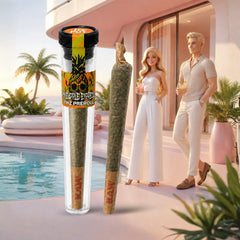
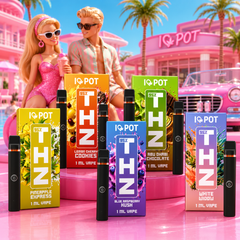
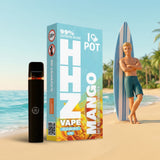







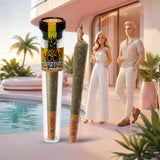

THZ is the market name for a lab-made cannabinoid that has recently started showing up in vapes and prerolls, and it isn't derived from hemp. Unlike CBD, which can be isolated directly from the hemp plant, THZ is created through several chemical steps during production. Plenty of half-truths circulate around these three letters: there's no official chemical naming so far, and lab-made single substances are subject to different rules in Germany than plant material from hemp.
Key facts
- THZ is a synthetic, lab-made cannabinoid, not a plant extract from hemp.
- There's no official, scientifically defined expansion of the three letters, it's a trade name.
- THZ vapes from I Love Pot are declared with a 95 percent cannabinoid content in the liquid and come in five flavors.
- In Germany, CBD flower from hemp is subject to a THC limit of 0.3 percent under § 1 No. 9 KCanG. This framework doesn't apply to synthetic cannabinoids.
What is THZ
THZ refers to a lab-made cannabinoid that's chemically classified within the tetrahydrocannabinol-related family, but it's not created through extraction from the hemp plant. Cannabinoids are a large group of substances. Some of them, like CBD or CBG, occur in significant amounts in hemp. Others are only present in trace amounts in the plant, or not at all, and are therefore chemically built up or converted.
THZ falls into the second category. Manufacturers list it as a standalone product line, not as a plant product. That's the most important point for classification: if you read THZ, you're reading a lab designation, not a strain name and not a plant origin. Strain names like Northern Lights or Pineapple Express that appear on THZ products refer to the terpene profile and flavor, not the origin of the cannabinoid.
What does the abbreviation THZ stand for
There's no official expansion of the abbreviation THZ defined by authorities or scientific literature. With established cannabinoids, the abbreviations are derived directly from the chemical name: THC stands for tetrahydrocannabinol, CBD for cannabidiol, CBG for cannabigerol. These names are clearly documented in the scientific literature.
It's different with newer trade names. They emerge from the market, not from chemical nomenclature, and no verifiable derivation of the individual letters is publicly available. As long as no manufacturer discloses the full chemical name along with a CAS number, the abbreviation remains a pure product name. So pay less attention to the letters and more to what's stated on the label and in the certificate of analysis.
THZ cannabinoid: origin and production
Synthetic cannabinoids like THZ are created through multi-step chemical processes that often start with a plant-based raw material before being carried further in the reactor. One common pathway in the industry looks roughly like this:
- Extraction of a base substance from hemp, usually CBD.
- Chemical conversion of this base substance using catalysts, solvents and defined temperatures.
- Purification, for example via distillation or chromatography, to remove byproducts and residual solvents.
- Analytical testing of the final substance, typically via HPLC or GC-MS, and filling into the respective format.
Depending on how the reaction is carried out, different molecular variants can result, sometimes even mixtures of several forms of one molecule. That's exactly why lab reports are more meaningful for this product group than any marketing claim. You can find what we provide for our analyses on our Certificates page. The European Union Drugs Agency (EUDA) has pointed out for years that the data on composition for newly emerging cannabinoids is often thinner than for established plant substances.
Is THZ legal in Germany
New cannabinoids in Germany aren't governed by the Consumer Cannabis Act (KCanG) but primarily by the NpSG, and there, it's the chemical structure of a substance that determines whether it falls under a particular substance group. The KCanG regulates cannabis as plant material and defines the hemp framework in § 1 No. 9 with a maximum of 0.3 percent THC. Lab-made single substances don't fall under this definition.
The NpSG instead works with substance groups described in the annex to the law. Lawmakers can expand this annex by regulation, which has happened several times in the past. For you, that means the status of individual cannabinoids isn't a permanent state but a snapshot that can change. Just how quickly that can happen is shown by looking back at the HHC ban in Germany.
| Country | Legal framework | Special feature |
|---|---|---|
| Germany | NpSG, KCanG, MedCanG | Substance groups in the NpSG annex, expandable by regulation |
| Austria | National substance lists, published in the Austrian Federal Legal Information System (RIS) | Classification of individual substances can only be checked via the currently valid version in RIS |
| Switzerland | BetmG with the lists of the BetmVV-EDI | Synthetic cannabinoids partly covered through generic descriptions |
Concrete statements about an individual molecule can only be made based on the current text of the regulation. If in doubt, check the currently valid version at gesetze-im-internet.de, the Austrian Federal Legal Information System, or Fedlex in Switzerland.
Legal lists are updated on an ongoing basis. A product available today could be classified differently after a new regulation. It's always worth checking the current version.
THZ vape: what is it
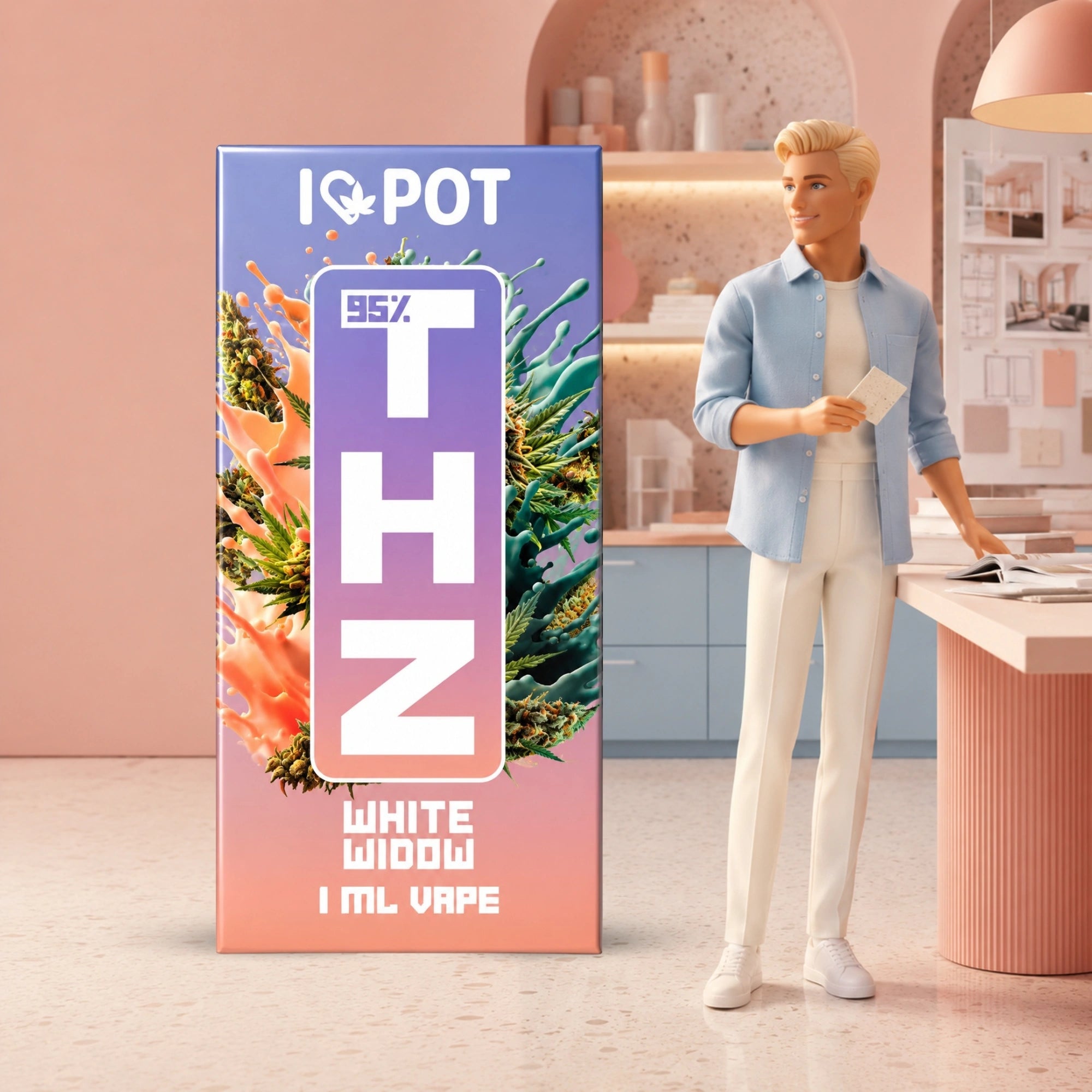
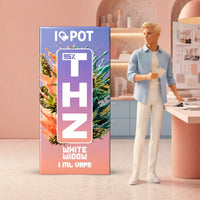
A THZ vape is a sealed vaporizer with a battery, heating element and a prefilled tank containing a liquid with the cannabinoid and terpenes. I Love Pot's THZ vapes are declared with a cannabinoid content of 95 percent in the liquid, with the rest consisting mainly of terpenes that carry the aroma of the respective strain.

Currently, the line comes in five flavors: White Widow, Pineapple Express, Blue Raspberry Kush, Lemon Cherry Cookies and Abu Dhabi Chocolate. The technology behind it isn't fundamentally different from other disposable vaporizers. How battery, coil and airflow sensor work together is explained in our article What is a vape pen. The full overview is available in the THZ Vapes collection.
THZ prerolls: what's behind them
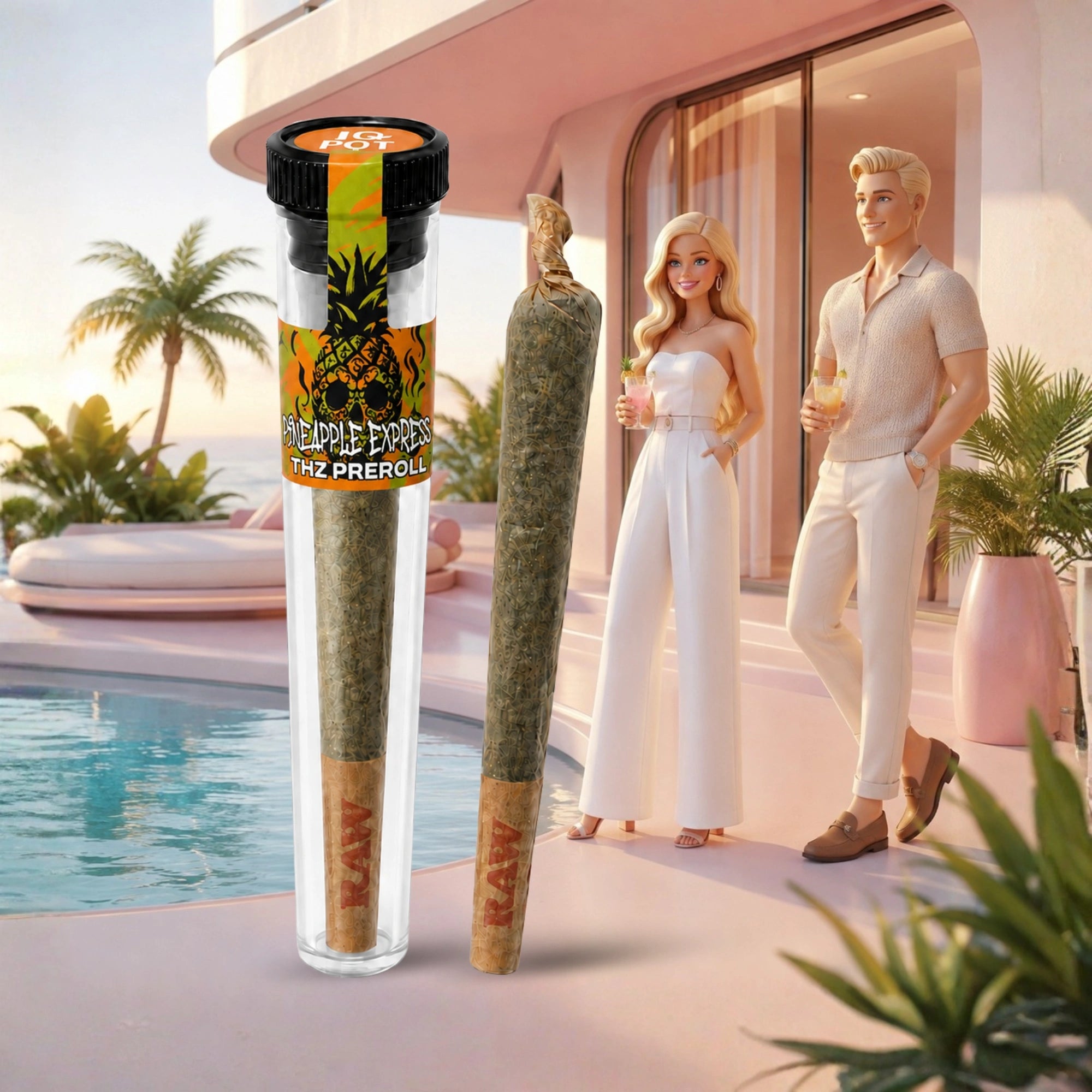
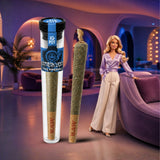
THZ prerolls are ready-rolled joints made from plant-based carrier material that's been infused with a THZ-containing extract. The carrier material is usually low-CBD or CBD-containing hemp material, which provides the structure and flavor, while the cannabinoid is applied separately. A filter at the end and a paper wrap complete the format.

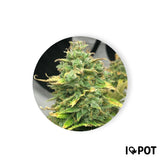
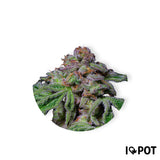
At I Love Pot, the line includes five strains: Northern Lights, Gorilla Glue, Pineapple Express, Super Lemon Haze and Skunk. These names stand for the terpene and flavor profile, not for a particular origin of the cannabinoid. Material, processing and declaration vary significantly between providers, so it's worth checking the details on fill weight and extract content. You can find all strains under THZ Prerolls.
How to spot a properly declared THZ product
What matters is traceable information about the contents on the label and certificate of analysis. These points are worth checking:
- Cannabinoid content stated in percent or milligrams, relative to a clearly specified amount.
- Complete ingredient list including terpenes and any additional components.
- Batch number that can be matched to an analysis report.
- Clear indication that it's a synthetically produced substance.
- Available lab certificate with date and testing lab.
If a batch number is missing or the composition stays vague, that's a clear sign to ask for more details. Our customer service can be reached via the contact link in the footer. A neutral profile of another lab-made cannabinoid is available in our article What is HHZ.
Sources
- Consumer Cannabis Act (KCanG), Federal Ministry of Justice, available at gesetze-im-internet.de
- NpSG including annex, legal text at gesetze-im-internet.de
- Austrian Federal Legal Information System (RIS), Republic of Austria, ris.bka.gv.at
- European Union Drugs Agency (EUDA), information on synthetic cannabinoids, 2024
- Ordinance of the FDHA on the Lists of Narcotics (BetmVV-EDI), Fedlex, Swiss Confederation
Produkte aus dem Artikel