







Inhalt
- What kind of plant is blue lotus, actually
- Blue lotus active compounds: which alkaloids are mentioned
- Blue lotus tea: preparation and what ends up in the cup
- Blue lotus tea effects: what users report
- Smoking blue lotus: what is different
- Blue lotus extract and what ratios like 10:1 mean
- Blue lotus dosage: why reliable information is missing
- Blue lotus side effects and known risks
- Is blue lotus legal in Germany, Austria and Switzerland
- Sources
 Passend zum Artikel
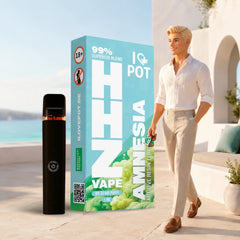
2ML HHZ Vape Pen 95% - Amnesia
€49,90
Ansehen
Users mostly describe the effects of blue lotus as mild: a calm, slightly warming feeling, sometimes altered dream perception, rarely more. There are practically no clinical studies in humans that confirm or refute these reports. What does exist are chemical analyses of the flower, historical sources from Egypt and a great many experience reports from the internet. The alkaloid content of the dried flowers also varies greatly depending on origin and processing, which explains why the reports differ so widely.
What kind of plant is blue lotus, actually
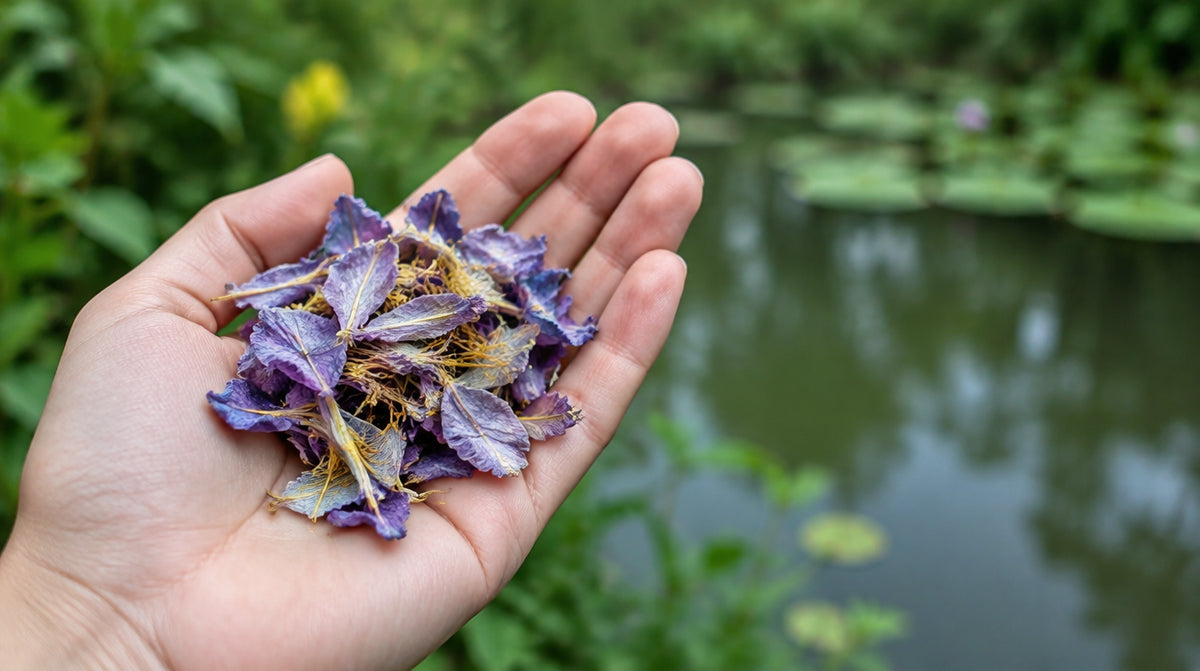
Botanically, blue lotus is a water lily, namely Nymphaea caerulea from the family Nymphaeaceae. Despite the shared name, it is not closely related to the Indian sacred lotus, Nelumbo nucifera. The plant grows in shallow, warm waters in Africa and bears light blue to violet flowers.
The plant is associated with ancient Egypt, where it appears in wall paintings and grave goods. Whether it was meant there as an intoxicant or as a symbol of rebirth is disputed in Egyptology.
Blue lotus active compounds: which alkaloids are mentioned
Two alkaloids are almost always named as the active ingredients: nuciferine and apomorphine. Nuciferine is an aporphine alkaloid that has mainly been studied in animal experiments. These results cannot simply be transferred to a cup of tea, because the doses used are far higher than what a flower provides.
For apomorphine, the data is much weaker. In medicine, apomorphine is known as a dopamine agonist. The detection of apomorphine in the plant is considered not clearly established. Many web texts quote one another here without citing an original measurement. It is assumed that the flower also contains flavonoids.
The alkaloid content also varies greatly depending on origin, harvest time and drying. Two batches of the same variety can differ significantly.
Blue lotus tea: preparation and what ends up in the cup
The classic infusion uses dried whole flowers or petals, which are covered with hot water and left to steep for a few minutes. Water reliably dissolves the flavonoids and sugars, while the alkaloids, as free bases, only partly pass into the water. Some sources suspect that alcohol dissolves alkaloids such as the aporphine alkaloids better than plain water.

In terms of taste, the infusion is floral and slightly bitter, and some people find it reminiscent of chamomile. If you are looking for dried flowers, you can find them with us as Blauer Lotus Tee, and more variants are in the category blue lotus. A practical detail from the preparation: petals that already fall apart when the water is poured over them could indicate unfavourable storage.
Blue lotus tea effects: what users report
Reports include relaxation, a slight heaviness in the limbs, dampened sensitivity to stimuli and occasionally more intense dreams. These descriptions are strikingly consistent across forums and collections of experience reports, which makes them interesting. They do not, however, replace a controlled study. To date, there is no published, placebo-controlled study on the psychotropic effects of Nymphaea caerulea in humans.
Intoxication with hallucinations is not part of the typical reports. Anyone expecting that will be disappointed. Part of the effect probably also comes down to expectation, ritual and the situation in which the tea is drunk. The same applies to chamomile or lavender tea, and it does not devalue the experience.
This is how the uncertainty could show up: two people drink the same infusion from the same batch, and one describes clear tiredness while the other only notices a pleasant taste. Differences like these cannot be resolved without a controlled study.
Smoking blue lotus: what is different
When smoked or vaporised, the described effect sets in faster but lasts a shorter time, and combustion products are produced. Dried petals burn easily and produce a mild, floral smoke. Many users mix them with other herbs because pure lotus smoke is perceived as thin and harsh. We offer the material ready rolled as Blauer Lotus Pre Roll.

Burning any plant material produces tar, carbon monoxide and irritants. This applies to blue lotus just as much as to any other herb, regardless of which compounds the plant contains.
There are no published measurements on which alkaloids even survive the heat. How exactly the alkaloids it contains behave when burned is unclear.
Blue lotus extract and what ratios like 10:1 mean
An extract is concentrated plant material, and the ratio on the label only describes how much raw material was used. With 10:1, ten grams of dried flowers were processed into one gram of extract on paper. The figure does not reveal which substances were actually enriched. A water extract mainly draws out sugars and flavonoids, while an alcohol extract shifts the profile towards alkaloids.
Because there is no defined marker compound and no pharmacopoeia-like standard for Nymphaea caerulea, two extracts with the same stated ratio cannot be compared. Resins, pastes and tinctures also differ in their solvent. Anyone who wants to assess a product should look at the stated extraction agent rather than the number in front of it.
Blue lotus dosage: why reliable information is missing
A scientifically derived dosage for blue lotus does not exist, because the necessary studies were never carried out. The amounts circulating online come from experience reports and retailer descriptions. They range from a few petals to several grams per infusion and contradict each other accordingly often.
The wide range has understandable reasons:
- The alkaloid content varies from batch to batch.
- The form of preparation determines how much actually dissolves.
- Metabolism differs from person to person.
- With extracts, it also remains unclear what exactly was concentrated.
For this reason, an amount from a forum post cannot sensibly be transferred to another product. This is not a formality: the same number of grams can mean a clearly different amount of alkaloids in two different batches.
Blue lotus side effects and known risks
Mainly nausea, dizziness, headaches, dry mouth and pronounced tiredness are reported, usually after larger amounts or after extracts. If apomorphine is actually present in the flower in a relevant amount, nausea would fit the known emetic effect of this substance in drug therapy. However, this connection is not reliably proven for the plant, because the detection of apomorphine in the plant is uncertain overall. There is no systematic system for recording side effects for blue lotus, and the data consists of individual case reports.
Interactions are particularly unclear. Anyone taking medication that acts on dopamine or serotonin systems is in unexplored territory when combining. The same applies to alcohol, which can reinforce the sedating component. Allergic reactions to plant material are also possible. If you take medication or have a pre-existing condition, it is better to clarify consumption with a doctor instead of relying on forum knowledge.
Is blue lotus legal in Germany, Austria and Switzerland
Nymphaea caerulea is not listed in the schedules of the German Narcotics Act (Betäubungsmittelgesetz) and does not fall under the substance groups of the German New Psychoactive Substances Act (Neue-psychoaktive-Stoffe-Gesetz). Trade in dried flowers in Germany therefore mainly takes place as incense, ornamental plants or collector's items.
For Austria and Switzerland, we do not have an equally clear classification that we could document here. The following overview therefore only states what is established and where you can check for yourself.
| Country | Dried flowers | Responsible body |
|---|---|---|
| Germany | Not listed in the schedules of the Narcotics Act (Betäubungsmittelgesetz) and not in the substance groups of the New Psychoactive Substances Act (Neue-psychoaktive-Stoffe-Gesetz) | Competent authorities |
| Austria | No explicit mention known to us in the narcotics lists, separate national rules | Competent national authorities |
| Switzerland | Separate lists and separate food law, check the classification case by case | Competent Swiss authorities |
The food law side is a separate matter. Whether a plant part may be sold as food in the EU depends on various food law requirements. For Nymphaea caerulea, a clear classification is missing, which is why products are often expressly labelled as not for consumption. Rules can also differ internationally, so it makes sense to check import regulations before travelling. You can find more information on our page about the legal notices and in the frequently asked questions.
Blue lotus is a plant product in its own right and has nothing to do with cannabinoids chemically. If you would like to compare botanical products, you can find more herbs in our Smartshop.
Sources
Produkte aus dem Artikel